Thursday, October 31, 2019

Beyond the Veil: Rolling Hills Asylum

Beyond the Veil: Rolling Hills Asylum

Last year, in my piece about the Palmyra Historical Museum, I asked the question: what happens when we die?
This Halloween, I ask a different question: what is fear? It’s like our gene expression, or perhaps our alcohol tolerance; it’s different for everyone. 
What frightens you? Is it the shadow that moved on its own? Or is it something more concrete, like the thought of being late to work? Regardless, nobody should have to live in fear like the residents of Rolling Hills Asylum. Abandoned. Left to rot for reasons beyond their control.
The patients of Rolling Hills Asylum in East Bethany, NY didn’t just live in fear; they bathed in it, slept in it, drank and ate it. Today, the spirits of those tortured dead keep the dark history of the Asylum alive, exposing horrors far greater, far deeper than mere bumps in the night.

A History of the Facility:
The Rolling Hills Asylum began as the Genesee County Poor Farm.

When you think of a haunted place, you think of a place that was built with good intentions, only to see tragedy, neglect, or acts of evil that leave spiritual stains on the place.
The Rolling Hills Asylum was never built with good intentions in mind.
The Genesee County Poor Farm broke ground in early 1827. Yes, there were actually places called “poor farms” back in the day, George Carlin be damned. The Genesee County Poor Farm housed some of New York’s “undesirables” (read: people the county didn’t want to take care of) such as orphaned children, destitute elderly,  the physically and mentally handicapped, habitual drunkards, and others who were unable to take care of themselves. 
Perhaps the most controversial inmates were unwed women. In those days, if a woman talked back to her spouse or requested a divorce, her butthurt husband could institutionalize her with no questions asked. It’s believed hundreds, perhaps thousands, of unwed women with complete possession of their mental faculties were locked up here.
Over time, more interesting clientele took up residence in the facility, including lunatics and people cited for misconduct.  A separate solitary confinement branch was opened here, in order to keep these people isolated from the other inmates. 
As you can imagine, the 200-acre facility housed many needy people. This might instantiate images of starving people crowding the halls in your mind, but the place was actually relatively self-sufficient. Physically-able residents would work the farm, raising animals such as chickens, pigs, horses, etc, while others would can fruits, vegetables, and meat. 
Hundreds of people died within the Asylum’s walls over its century of operation, but with no family or loved ones to claim them, many were buried in unmarked graves around the property. A single monument in the nearby Genesee County Park is the only tribute to these tortured souls.
Though the Poor Farm would close in 1974, it continues to stand as a stark reminder of how we treated the destitute in those early days.

Ghost Experiences: 
The Shadow Hallway. A mysterious darkness sometimes envelops the end of the hall.

The Rolling Hills Asylum is considered one of the most haunted places in the world, and is it any wonder? As the Palmyra Historical Museum is any indicator, ghosts exist to tell their life stories even after they have passed, and with the thousands of colorful characters that passed through the Asylum in its heyday, there’s no shortage of stories to tell. 
The most popular spot in the building for seeing ghosts is the Shadow Hallway on the second floor. Here, shadows and apparitions peek out of rooms, walk back and forth, and have even been reported to crawl along the floor. Perhaps the strangest phenomenon reported here is the encroaching darkness itself.
“Sometimes, the entire hallway gets blacked out,” said Gina Bengston, a veteran ghost hunter and host of Ghostly Excursions. The end of the hallway is typically bathed in the red glow of an exit sign, but the darkness can even block that light out. It’s not known why this happens, but it’s frightening nevertheless.
One notable resident of this hallway is Roy. In the 1800’s, Roy was a resident of the poor farm who suffered from gigantism, a disease of the pituitary gland that causes abnormal growth. By age 12, Roy was almost seven feet tall, and his family had him committed out of embarrassment. His hulking shadow has been captured on film throughout the building.
Apparently, Roy has also taken a liking to the owner of the Asylum, Sharon Coyle. During her final walkthrough one night, Coyle saw a rat that caused her to scream and flee the building. The next day, the rat was found in the same part of the building, dead. There was a bloody handprint on the wall near its corpse; Sharon claims the handprint belongs to Roy, who killed the rat for her.
Another interesting room off the Shadow Hallway is the Portal Room. Mediums who have visited the property claim the room contains a portal to another dimension, and as you can expect, many bizarre things have happened here. A woman was photographed here on a ghost hunt, and a strange green shape was seen hovering above her shoulder in the photo. Further analysis revealed a baby’s head, which prompted the woman to make a chilling confession; she had a miscarriage years before.
On the top floor are two notable rooms; the Organ Room and Nurse Emma’s Room. The Organ Room is where a doctor named George Flemming passed away from a stroke. His spirit is said to growl at visitors, but that’s only because the stroke paralyzed his vocal cords; he’s one of the friendliest spirits in the Asylum. 
Nurse Emma has an unfortunate reputation. On Ghost Adventures, she was depicted as an abusive nurse who practiced black magic, a story that would later inspire the film Grave Encounters. In reality, Nurse Emma was a strict disciplinarian, but by no means was she evil. The owner of the Asylum, Sharon Coyle, has had to defend her reputation on several occasions.
“Nurse Emma is NOT evil,” she posted on the Rolling Hills Asylum Facebook page in 2015. “She did not practice satanic rituals. She was a Baptist, and is buried in a local Baptist cemetery.” 
Men are nevertheless asked to declare themselves before entering her room. Why only men? Because back in the day, it would be a major faux pas to enter a women’s changing area without asking. Correct me if I’m wrong...but I think that still applies today.
Most visitors concur that Nurse Emma is not the monster she’s painted out to be. Another character in the building, however, is still a rather divisive figure. In the basement resides Raymond, a maintenance man for the building in life, who many believe abused the female residents of the asylum. In the same Facebook post from 2015, Coyle defended Raymond (first name “John”) from claims that he had been a pedophile in life. Many historians and ghost hunters, however, disagree. Many believe his spirit pushes people around who enter his room.
Also in the basement is the morgue, complete with an embalming table. People who lay on this table and ask for a nurse’s help may report the sensation of being touched or operated on. There is a Christmas Room, where the spirits of children will laugh and move toys around.
There are so many rooms and notable spirits in the Asylum, it would be impossible to describe them all in one post.

My Investigation:
This image was NOT captured during my investigation; it was taken by an employee of the asylum back in 2017. This is believed to be the apparition of Roy.

The drive up to Rolling Hills Asylum doesn’t prepare you at all. The vast farmland and rolling hills (from which the Asylum got its name) of Genesee County, combined with the cool September air wafting through the open car window, put me at ease and lulled me into a false sense of security. After driving through the quiet village of Bethany, I began to wonder where in the endless expanse of Oz-like country an insane asylum could possibly be, when suddenly, as I reached the top of the hill where Routes 15 and 49 meet, there it was. 
Even in a vacuum, the place has an unsettling vibe. It rises from the flat fields of corn like a grotesque shadow, a single cupola clawing at the sky. I got serious concentration camp vibes from the exterior, which was more than enough to give me the heebie-jeebies. 
Once inside, however, I felt strangely cozy. The entrance was decorated with no one holiday in mind. There was a Christmas tree in the entrance hall, Halloween decor in the gift shop, and Leprechaun Hats in some of the downstairs hallways. We were taken into the gift shop to sign waivers, and I finally got to meet the owner, Sharon Coyle. She is ruthlessly dedicated to the Asylum, to the point where she sacrificed her marriage and cushy film career in California to be the caretaker. No food or drink is allowed outside of the gift shop area, lest they attract rats. Residents are expected not to taunt the spirits or perform rituals. 
Coyle keeps a tight ship, which has resulted in some less-than-flattering reviews online, but I personally found no problem with it. 
My night began with Bengston and another paranormal investigator from Texas (whose name sadly escapes me) in the Organ Room. Here, Bengston placed her favorite ghost hunting device, a stuffed fox that measures electromagnetic waves, on the bed. No sooner did she set it down that the thing began to alarm. 
About twenty minutes into our conversation with the spirit, Bengston noticed something strange on her thermal camera. Though I was sitting cross-legged on a chair across from her, the image in her camera was of an older man sitting straight-legged. A trick of the light, or spirit sitting in my lap? We’ll never know for sure…
We next spent an hour in the Shadow Hallway, hoping for an apparition to appear. Though a couple of odd shapes would appear in the doorways throughout the halls, nothing definitive was documented. That didn’t mean strange things didn’t happen, however.
At one point, Bengston asked for one of the spirits to knock to show they were there. A few seconds later, a knock was heard in Roy’s room.
Stranger still, another member of the ghost tour had been standing in the doorway to one of the larger rooms, and reported feeling hands gently nudging her out of the room. I volunteered to stand in the doorway to see if I felt the same thing...and to my surprise, I found it difficult to lean back. It wasn’t a hard push I felt, but rather something that prevented me from leaning back, as if a nurse was gently trying to keep me out of the room.
A trip to the Morgue saw an EMF reader spike to its highest setting on several occasions. The temperature also dropped a considerable five degrees while we were in there. 
No activity was reported in the other rooms in the basement, so the group took one last trip to the Shadow Hallway. Once again, I felt the gentle force on my back, keeping me out of the back room. At one point, something passed by one of the windows in my peripheral vision. Bengston also reported hearing a little girl squealing on her digital recorder during her live EVP review.

Is It Haunted?:
While the paranormal experiences I had in the Rolling Hills Asylum weren’t quite as diverse as the Historic Palmyra Museum, knowing where I was and what had occurred there was more than enough to satiate me. 
Can I personally say the place is haunted?
Strange things definitely happened, but they could easily be explained away. It’s an old building, explaining the knocks and occasional footsteps we may have heard. The pushing sensation on my back wasn’t strong enough to warrant a paranormal explanation, and there was power in the building when the strange EMF readings were recorded. 
The rapid temperature drop and the EVP are a bit more difficult to explain. Nevertheless, there is a strange aura surrounding the Rolling Hills Asylum, even if it isn’t paranormal, no doubt a consequence of the thousands of inhabitants that passed through it in its day.

*The photos used in this blog post are not mine.

Tuesday, April 30, 2019

WrestleMania Weekend: Why Everyone Should Go to WrestleMania at least once

The Beginning:
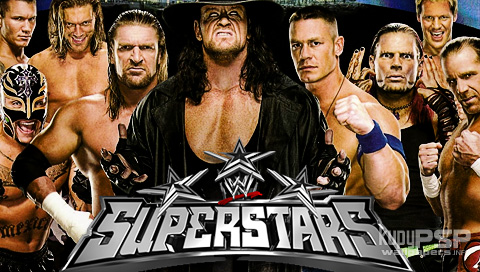
MV5BZWYyODJjOTEtOTc5OS00ZGIxLWE5MWEtYWRmZGYxMmIzN2E0XkEyXkFqcGdeQXVyMTEyMDcwNw__._V1_.0.jpg
I like to say I'm a professional wrestling fan by mistake.
When an episode of WWE Superstars came on in February 2010, I immediately grabbed the remote and tried to tune away, only to realize the batteries were dead. To make things more complicated, I was doing my business in the adjoining bathroom, and wasn't willing to get up to change the channel manually. I was forced to acquiesce.
Instead, I got hooked on it.
Most people got hooked on WWE during the 80's and 90's, when the likes of real-life cartoon characters such as Hulk Hogan, the Ultimate Warrior and Andre the Giant graced their television screen, or during the Attitude Era when r-rated trash talkers like Stone Cold Steve Austin and The Rock traded profanity-laced verbal barbs and engaged in risque activities not seen anywhere else on TV. I got hooked on pro wrestling from a random women's tag team match, of which three of the performers aren't even with the company anymore (if you're curious, the match was between the team of Kelly Kelly and Eve Torres, and the team of Katie Lea Burchill and Alicia Fox).

That one hour episode of WWE Superstars was all it took to make me a lifetime fan.
One thing they talked about throughout the show, and on every other wrestling show I managed to catch the next two months, was how close WrestleMania 26 was. The announcers hyped 'Mania up as the Super Bowl of sports entertainment, and constantly showed clips of the many story-lines that were building up to the "Showcase of the Immortals." I felt anger towards Vince McMahon, who had screwed his opponent Bret Hart over on so many occasions that I looked forward to seeing him get his ass kicked at WrestleMania. I felt sympathy for Edge, who had lost almost a year of his career due to a horrible injury, and seemed unlikely to win his title back from the cold, calculating Chris Jericho. I was fearful for Shawn Michaels, who would be putting his career on the line just to get a match with his eternal rival, the Undertaker.
Though I didn't watch that WrestleMania live, I did buy the DVD later that summer. Every year after that, however, I made sure to tune in on WrestleMania Sunday. I was even one of the first to subscribe to the WWE Network when it debuted in 2014.
In the meantime, wrestling slowly became one of the biggest parts in my life. For seven years, I never missed an episode of Monday Night Raw. I watched SmackDown whenever I could. I made playlists of all my favorite wrestling theme songs, and subscribed to YouTube Channels that posted pay-per-view highlights.
In a way, wrestling was like another member of the family, there for me in good times and bad. The night after my high school graduation was the 2014 Money in the Bank pay-per-view, one of my favorite shows ever. I watched NXT Takeover: Rival, the show that got me hooked on NXT, on the way to my Grandma's calling hours. Summerslam 2015 took place on my 19th birthday, which was also the day I came out of the closet to all of my friends and family.
Despite my love for the WWE and pro wrestling in general, I never in my wildest dreams thought I would go to WrestleMania. I'd gone to a couple of TV tapings and was an ardent supporter of the local wrestling circuits, but the thought of going to a wrestling pay-per-view, let alone the biggest one of the year, seemed ludicrous.
Nine years after that fateful episode of WWE Superstars, I bought my tickets for WrestleMania 35.
The Culmination of a Childhood Dream:
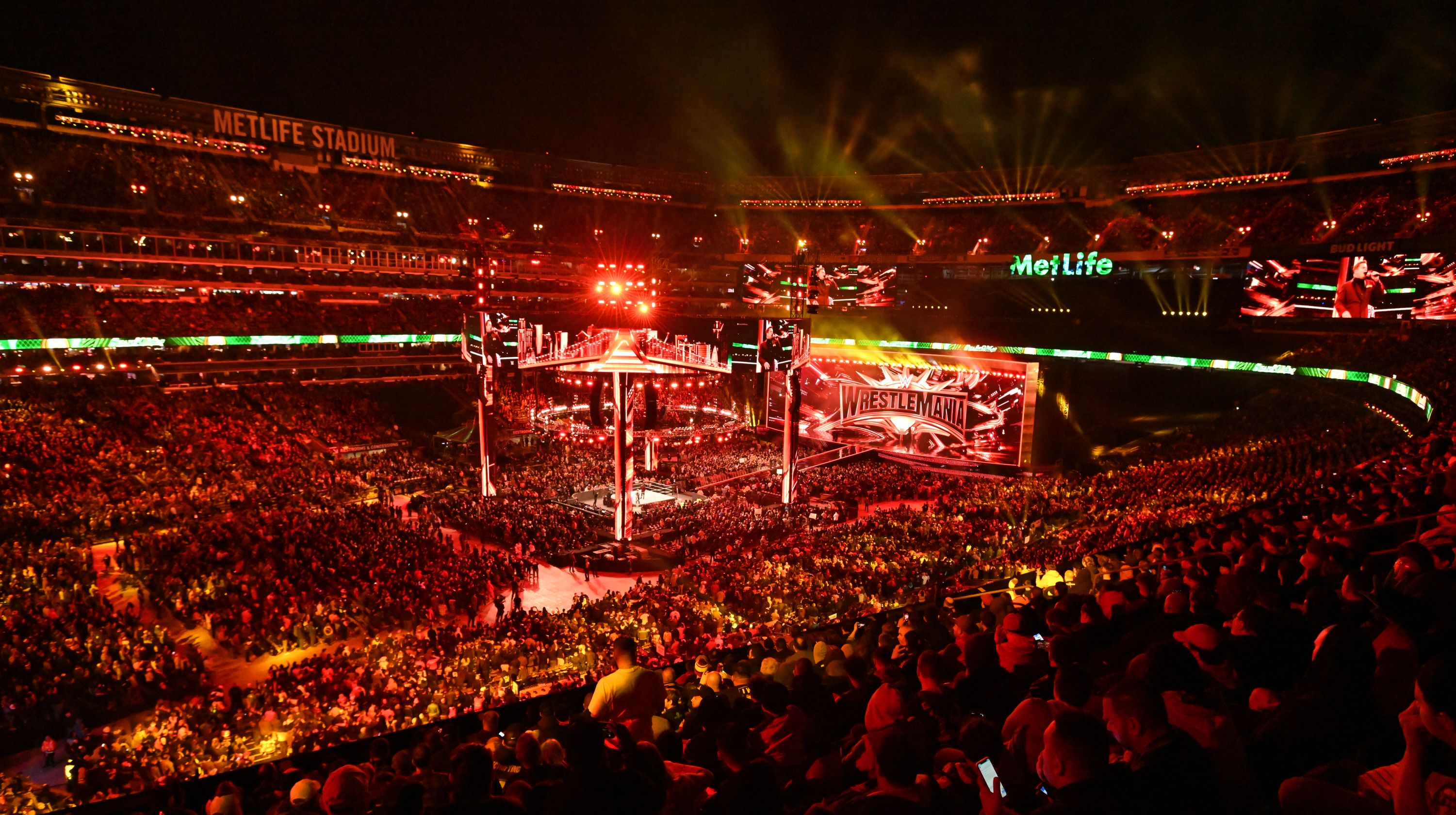
5071a37a-5571-4947-9b52-a10d3790a082-WM35_04072019dg_6956.0.jpeg
I've been to New York City three or four times, and I always have the time of my life. Even if you're not going for an event, the Big Apple is still something you should put on the bucket list. Both NXT Takeover and WrestleMania were amazing experiences, but I had just as much fun exploring the streets of Manhattan on Saturday, getting lost in the Nintendo World Store and checking out the Empire State Building. Having grown up in a small town in Upstate New York, I'm always overwhelmed by just how much there is to do there.
I'll admit that, from a wrestling standpoint, I was looking more forward to Takeover than 'Mania, and I wasn't disappointed. The show featured just about everything: high flying action (the women's Fatal 4-Way), methodical technical wrestling (the U.K title match), emotional farewells (the end of the tag team title match), and the resolution to one of the longest storylines in NXT history (the rise of Johnny Gargano). Vince McMahon compares his product to a movie-length variety show. If that's the case, then NXT delivered.
I had a blast at Takeover, but worried if WrestleMania would compare. After all, it was going to be a far longer show, and I was already tuckered out after only three hours of fantastic wrestling. How could I stomach seven hours of good to great wrestling?
As my friend and I pulled up to the Meadowlands Sports Complex on the eve of April 7th, however, it finally began to sink in. In many ways, this year's WrestleMania card represented the culmination of my journey as a pro wrestling fan.
I was there in the early days of Kofi Kingston's career, and even as he toiled in the midcard for those nine years I always retained a soft spot for his high-flying abilities and his ability to have good matches with anybody. Now, he had finally worked his way towards the top of the card, preparing for battle against another wrestler I had grown up with: Daniel Bryan.
In another piece I wrote on Cageside, I wrote about how this WrestleMania would feature a healthy amount of fresh talent. Only once I hit publish did I realize that wasn't entirely the case. Batista, Kurt Angle, Triple H, Rey Mysterio...many of the talent towards the top of the card had been wrestling for more than 20 years.
Then again, these were wrestlers who were big in my heyday. Sure, I probably would've lost my mind if Stone Cold Steve Austin, Goldberg, or The Rock showed up, but these names never excited me like Mysterio or Batista. Rey Mysterio was my favorite wrestler during the honeymoon phase of my relationship with the sport, and I had never seen him live. I also had the sense that for Mysterio and some of the other veterans, this WrestleMania could very well have been the last ride. In the end, I was right, for Batista announced his retirement immediately after his match with Triple H. 
And then there was the women's triple threat match. I may not have grown up with the women in this match, but there is something poetic in the fact that the women were going on last. After all, the first match I'd ever seen was a meaningless divas tag team match on a throwaway episode of WWE Superstars. Nine years later, the women wrestlers were anything but afterthoughts. They were the main event. Like my experience growing up with the sport, women's wrestling had come full circle.
When I finally stepped out into that crowded stadium, and I looked out into the sea of wrestling fans, I realized I wasn't alone in fulfilling my dream. 82,265 wrestling fans had come from all over the world that night for the show, and whether they were excited or not, it was hard for all of us in section 316 not to smile and take in the moment.
I've always rejected the notion that wrestling is a "redneck thing." Sure, I had met many awesome blue collar folks that weekend, but I also met people who one would never expect were wrestling fans. Halfway through the show, I found out the two young men sitting next to me were from Belgium. I mentioned I was from upstate New York, since nobody knows where Rochester is. When the one next to me said "Go Bills!," I almost fell out of my chair.
The show itself was fun, but sharing in the moment with the community of wrestling fans is what I will never forget about that night. From chanting "Joe!" at the guy who perfectly cosplayed as Samoa Joe, to the wave during the slow parts of the show, to jumping for joy and high-fiving when Kofi Kingston won the championship, there wasn't a dull moment. 

The Aftermath:

You know that awesome feeling you get when you board the plane to go home after one of the best vacations of your life? Okay, maybe it's not that awesome for most of you, but whenever I board the plane to go home, I experience sensations of both warm melancholy and excitement at telling everyone my experience.

Anyway, as I boarded the JetBlue regional jet that would take me back to Rochester, I knew I'd just had one of those vacations. I also knew that WrestleMania would be headed to Tampa next year, and considered going back the next year and making the trip an annual tradition. Then again, one of the major complaints wrestling fans have these days is the overexposure of the product. Once upon a time, there were only two televised wrestling shows a week, with the occasional pay-per-view or indie wrestling show. 

Today, there are televised wrestling shows every night, pay-per-views every other week, all kinds of indie promotions, and a subscriber network with over thousands of hours of past wrestling content. While it's fantastic that wrestling promotions have so many new ways to make income, it's also a drain on the standard professional wrestling fan's interest in the product. It doesn't have the luster it once did.

When I think back to 2010, the early days of my wrestling addiction, I remember that I couldn't watch either Raw or Smackdown, because Raw was on too late and Smackdown was on a channel we didn't have. The only show I could watch was Superstars (and whatever that NXT show was), and I made sure never to miss it. Until Thursday night came around, I would scour the internet for wrestling news, YouTube for old matches and pay-per-view highlights, and Amazon for my next wrestling DVD purchase. Because there was so little wrestling out there, I wanted more of it.

Now with so much content out there, I understand the need to take a step back from the product so that it stays fresh. I don't look up wrestling highlights anymore. I only occasionally tune in to Raw or Smackdown. This same logic should apply to WrestleMania, something the WWE themselves once touted as a once in a lifetime event. If one were to go to WrestleMania weekend every year, the magic would surely fade over time, even if it does go to a different city.

Still, I encourage every professional wrestling fan to make the trip to WrestleMania weekend at least once in their lives. Don't worry about spending a lot either. Some people say it's good to put aside $1,000 for the experience. I can tell you I spent closer to $700 on the experience, and that's with all the spending I did at the Nintendo World Store. Stay in a cheap Airbnb with one room and a bath; it's not like you're going to be staying in your room until show time. Figure out the metro schedule and plan the cheapest path to your destinations, or if the city is small, walk from place to place. Tampa is a lot smaller than New York, and I guarantee walking the streets in balmy weather will be better than waiting for the New Jersey metro in freezing rain.

At the end of the day, whether you're sitting in the front row of the show or up in the nosebleeds, whether you're in hoppin' New Orleans or blue collar Texas, whether you grew up with the likes of Stone Cold or the likes of Finn Balor, you'll feel like a kid again.

Wednesday, February 20, 2019

The Hare always beats the Tortoise...or so they say.


While perusing YouTube the other night, a  video that claimed to be the perfect metaphor for white privilege appeared on my feed. The video shows a group of people of different races, ages, and backgrounds about to compete in a footrace for $100. Before they can begin, however, the race official asks the participants a series of questions. If the answer is yes, the racer takes a step forward.

As the questions go on, it becomes apparent that the white runners do indeed have a huge handicap, while the black runners have to start from all the way at the back of the line. Perhaps to the college sophomore who wrote the script, this seems like a terrific metaphor for privilege. In many ways, it is; it's no secret that people of color are statistically disadvantaged.  We can sit here and debate forever about these numbers, but that would distract from my main point.

And my point is this: life is not a race.

It's true that many people of color often have to start from the bottom. From my experience growing up in a 6,000 population town, that's probably true of many Caucasian folks too. But when did life become a race to the top?

Ultimately, the problem I had with this video was not the message, but the metaphor itself. There's a great saying among writers that all of the media we consume, all of those movies, books, and video games we gobble up, started as a blank document. An empty slate soon to be filled with drafts, rewrites, eraser scribbles, tracked changes, blood, sweat, and tears, all for the sake of making it the thing you rave about to your friends.

Incidentally, this applies to humans as well. Regardless of who we are born to, we begin life as empty slates. Sure, we inherit certain traits from our parents, but its ultimately our settings, interests, and relationships we pack into those opening paragraphs that ultimately influence the novel of our lives.

That doesn't have to be a bad thing. Doesn't have to be a good thing either. It's just a fact of life; your experiences and your background play a big role in who you become. In many cases, they also influence how long it takes to get where you want to be. But in the end, who cares how long it takes if you know in your heart you will get there someday anyway?

We live in a world of hares. This is never more true than in college, a time when I judged myself the harshest. College was the hardest adjustment I ever had to make. I had moved six hours away from my blue-collar hometown to a largely white-collar New England city. The topics of conversation matured, and I longed for those days of small-town gossip as the people around me threw around euphemisms for sex and weed. Everyone else managed to shed the final vestiges of their grade school years with ease, trading in their soccer warmups and black socks giving way to suit jackets and Croft and Barrow shoes. I convinced myself that I was way behind everyone else, to the point where I would never be able to catch up.

I spent many a weekday night in the shower, close to breaking out in tears, as visions of homelessness, serving up Slurpees at 7-Eleven in some nameless suburb, and curling up in blankets alone every night haunted me. Everything was a competition in college, and I never seemed to finish first. Aside from a few Dean's List appearances, my defeatist mentality kept me from making the most of the college experience. I never ran for student or club offices, never participated in mock interviews or the annual Elevator Pitch competitions, never shared my writing in poetry readings and campus publications.

In the back of my mind, I told myself that I would always finish last.

My parents told me that my autism would always shave a few years off my mental age, but I never knew what that meant until college. I didn't feel like a young adult. I didn't want to dress up and spew a rehearsed pitch at job fairs. I didn't want to go to the bar after class and network. I wanted to play Super Smash Bros. with my roommate.

The world is more interconnected than ever, and it makes us focus on the people in front of us rather than ourselves.
In many ways, I felt like the black racers in the video probably did. The world is more interconnected than ever, and it makes us focus on the people in front of us rather than ourselves.

My experience was relatively tame compared to some of my friends, who experienced a far wider range of emotions in their college years. Some were apathetic, electing to stay in their dorm rooms or apartments all day and sleep through class. They would end up dropping out of college, and returning home to live with their folks.

Others became obsessed with success, the illusion of having the perfect life. They withdrew into their resumes and LinkedIn accounts, and shelled out untold amounts of money to attend leadership seminars and join "exclusive" campus organizations (I have my own experiences with leadership organizations, see here). Failure was not an option for them, and I had to help them weather the storm a fair amount of times.

I've even had to talk people off the edge.

In the world of first or bust, life takes a backseat. There's a reason depression is statistically higher in younger people than ever before. Life isn't as simple as a bike ride with friends anymore. Soon, there will be bills to pay. Home isn't really home anymore. The friends you thought you'd never lose find their own calling, and leave you out to dry. Being good at something isn't optional anymore: you can't just play on a baseball team because you can stand in the outfield and swat at butterflies like you could in Little League.

Today, however, I have a mortgage. I hold a sturdy 9-5 job, and still have time and money for hobbies, travel, and other pursuits. Here's a secret your peers, teachers, and career counselors don't want you to know: there is no universal definition of success.

People like to say there is. A two-story house, nuclear family, a couple of pets, a six-figure income, weekends playing guitar for a local cover band...this is probably the closest thing we can get to what society defines as successful. Dovetailing back into the race mentality, many of these young people consider what major will get them there the quickest rather than the major they would really like to pursue. Politicians always say we need more engineers and scientists. Those big dollar signs are hard to ignore, despite the fact that the Congressional Research Service discovered that unemployment is higher among science and engineering professionals than in other, similar areas.

Not all visions of success are the same, but many probably seek at least one of the elements of societal success. Aside from the nuclear family (and playing the guitar), this was my vision in my early college years. I had made the conscious decision to follow my dreams in high school when I decided to study writing, but even then I couldn't shake the many internal and external voices telling me what success was supposed to look like.

In my sophomore year, I finally threw my hands up. Why compete in a race I had no chance of winning? I had gone through a long bout with depression, and was ready to focus on what really made me happy.

Creative writing professors convinced everyone into trying to write the next great American novel, but I had worked up the confidence to write the sci-fi/fantasy stories that I'd always wanted to. Instead of doing the standard marketing internship, I spent the summer writing for my hometown newspaper and learned a surprising amount about the place I'd grown up in. I was called unprofessional, childish, but I ignored it all. I was happy, and if there was one thing I learned from my simple upbringing, it's that success is as simple as loving what you're doing. Perhaps it wasn't the ideal college experience, but it was mine, and I wouldn't have taken it back for anything.

Then came May, 2017. After only three years in college, I would be graduating with my B.S in Professional Writing. Everyone I knew reiterated to me what a big deal this was. How far ahead I was of everyone else. But how could that be? I'd taken the exact same number of credits as everyone else, and many of them got better grades than I had.

The concept of success has sown sinister seeds in the subconscious of young Americans. It's the God we all worship, the thing we are willing to sacrifice everything to get. We perceive it as gracing the few and throwing everyone else to the wolves.

Every one of these drivers has a different finish line, so how do we know who wins?


It took me years to realize that success is not universal; it's personal. NASCAR is back, so let's envision this imaginary race to success as an actual stock car race. As soon as the green flag waves, some of the drivers will turn around and go in the opposite direction. Some drive onto the infield grass, and some of these drivers stop to do donuts. Some head down pit road at full speed. Every one of these drivers has a different finish line, so how do we know who wins?

 In the age of social media, it's so easy to get absorbed into the lives of others. To desire the successes and riches they've amassed, the achievements they've unlocked. It's when we take a step back, look inside ourselves, and find what it is that we really want that we are truly happy. It may take a day, it may take several decades, but no matter how long it takes, it truly is the journey, not the destination, that we'll remember.

What I'm saying is, you don't have to be a hare, you don't have to be the tortoise. Just be yourself.


Wednesday, November 7, 2018

Beyond the Veil: Palmyra Historic Museum

The old Phelps General Store, a completely untouched time capsule. It draws visitors from all over the country...as well as those from the afterlife.


If you're like me, you go full spoopy for Halloween. Listening to horror podcasts and playlists of Top5s and Chills videos on Youtube, while carving pumpkins and hanging skull lights in the bedroom window. Taking bike rides to cemeteries around town, hoping for your own fateful encounter with the enigmatic forces of the afterlife.

Sadly, that wonderful time of year has come to a close. Halloween has passed, and the air will only grow colder until snow blankets everything in gray once more. The good news for us connoisseurs of anything spoopy, however, is that the unknown doesn't take a vacation. 

Last summer, I had the opportunity to join a group of renowned ghost hunters on an investigation of the historic Palmyra complex of museums. For years, I'd been a skeptic of the paranormal, questioning its existence, though never denying it. After six hours within the many museums, however, I became a believer.

What follows is the story I had originally written for the Sun & Record/Wayne County Mail, edited to give more insight into my personal experience. Strap in, folks, because this will definitely be the cure for your Halloween Hangover:


August 11, Palmyra --

It’s time once more to ask the age-old question; what happens when we die? Does our soul still remain on Earth, in places we felt the most attached to when we were alive? That’s what Bob Christopher and Gina Bengtson, famed paranormal investigators and co-founders of Ghostly Excursions, believe. The duo have explored paranormal hotspots all across the Eastern Seaboard in search of ghostly evidence, and for the fifth time, their hunt has brought them back to Historic Palmyra.

Whereas most towns and villages keep their history locked in dusty cabinets, Palmyra’s history is on full display. The archaic buildings that comprise the village are all original. Historic Palmyra has gone to great lengths to maintain the town’s 1800’s aesthetic, even saving the buildings on the north side of town from forced urban renewal by the federal government.

“I always get incredible evidence when I’m here,” said Christopher, who, in addition to Ghostly Excursions, stars on the TV series Haunted Destinations: Ghost Detectives.  Voices, strange energy, apparitions, the sensation of being touched by invisible hands…these events and more have all been reported at the museum, and confirmed by the duo on their subsequent investigations. It seems, in their effort to preserve the past, Historic Palmyra has inevitably preserved many souls as well...

“The history of Palmyra is completely unique, compared to the rest of the Finger Lakes,” said Bonnie Hays, President of Historic Palmyra and the main proprietor of the five museums. It’s this unique history, at times dark and troubled, that she believes fuels the spirits of Historic Palmyra’s five museums. Under the quaint buildings and modern conveniences of this thoroughly modernized Wayne County village lies the canal town of old, where building fires and street fights rage on in the afterlife.

Most of the paranormal activity is experienced in three of the museums: the Historical Museum, the Phelps General Store, and the Alling Coverlet. Before the investigation even began, however, we experienced a tremendous amount of activity in the apartment above the General Store.

It was during our initial tour of the area. I had followed Bengston to the top floor of the Store apartment, when we heard a commotion from the downstairs living room; the group's flashlights were switching on and off on their own accord! We returned to the room to, indeed, see the lights flickering on their own. 

The skeptic in me found this easy to write off, at first. The three flashlights in question were all twist-style lights, which are relatively easy to switch on even without a guiding hand, especially on a table surface in a room with many moving people. It was happened next, however, that truly set the mood for the night's events.

To give a bit more perspective, the second floor living room is believed to be haunted by young children who'd died in a mysterious fire in the 1800's. Believing we were in the presence of child spirits, we spoke benevolently to our apparent hosts.

"Do you like playing with the flashlight?" one of the hunters said. On cue, the middle flashlight shuffled across the table, as if guided by a young person's curious hand. No wind, no fan, no pockets of air were present on that warm summer's night. It hadn't taken long for the unexplained to make its presence known.

We started the actual investigation in the main Historic Museum. Formerly a Prohibition tavern and hotel, it houses over 200 exhibits packed with historical artifacts. It’s here that the ghosts of children frequently mock and touch guests, and the energy of Dr. Reuben Reeves can be felt in the Doctor’s Room. It was in this room that we captured a compelling voice on a spirit box, a device that rapidly scans through radio frequencies and allows spirits to communicate through the white noise. When asked who resided in the Doctor’s Room, an eerie voice came through.

“Reuben…Reeves.”

Upon hearing the voice, the feeling in the room completely changed. It was hard to describe, although at the time I recall comparing it to that initial feeling of coming down with an illness. When your body becomes warm, almost numb, and every pocket of air feels like icicles scraping your skin.

Most of the evening’s activities, as you already know, centered on the Phelps General Store. Skeptic or not, the Store is a must-see. Time quite literally stands still in this post-Civil War marketplace and home, which has remained unspoiled by indoor plumbing and electricity. All of the items on the shelves, from detergents to sugar, harken back to those older days.

Above the store is the aforementioned two-floor apartment, where multiple residents lived over the years. One of these residents was Sibyl Phelps, a graduate of the Eastman School of Music and lifelong resident of Palmyra. She returned here after finishing her studies, where she would remain until her death in 1976. 

One employee reported coming across the apparition of Sibyl in a bedroom on the top floor, who turned to him and said “don’t touch my things.” He refuses to go upstairs alone to this day. During the ghost hunt, Bengtson captured something stunning in this very room on her thermal imaging camera, which captures temperature readings in the surrounding area; a peculiar cold spot in the shape of a human torso staring out the window. This image only appeared in this window, and lasted for a good twenty minutes. Was this Sibyl Phelps, observing the village she once called home?

The Alling Coverlet was the final stop of the hunt, and is a personal favorite of Bengtson.

“The ghosts here like to make fun of my Massachusetts accent,” she admitted. The Alling House is already a phenomenon in its own right, boasting the largest collection of American hand-woven coverlets in the United States. The beautiful tapestries hang from the ceiling like banners.

On the hunt, two different spirits came through the white noise of the spirit box, answering the many questions of the attendees. Over an hour was spent communicating with these spirits, as they smartly answered every question asked of them.

History is alive and well in Palmyra, and Historic Palmyra has many more ghost hunts and walks planned in the coming months, so that others can experience firsthand the voices of the village’s past.  

Postmortem:
I should add that, as I was typing this, the door to my office shut on its own accord several times. It is a windy day out, which more than likely explains that, but after seeing that flashlight move on its own I'm just not sure anymore...


Monday, August 13, 2018

My NASCAR experience at The Glen

I've always been a casual NASCAR fan at best. Growing up in the early 2000's, I used to log onto NASCAR.com after a long day of school to watch the most recent crashes. That's why most of us watch NASCAR, right? Who cares if redneck #332 finished in second place or first? Show me the clip of that 27-car pileup from Talladega 2003, and I'm a happy guy.

It wasn't until I got a little older that I began to appreciate the sport for what it was.

The 2007 Daytona 500 was the first time I ever felt disappointed after a sporting event. Mark Martin, a 30+ year veteran whose career was defined by "oh, so close" moments, finally had a chance to cement his name as a Daytona 500 champion. With only two laps to go, he had a solid lead over the rest of the field, when younger driver Kevin Harvick emerged from the middle of the pack like a bat out of hell and stole the lead with one lap to go. They would trade the lead (and a good amount of paint) up until the final straightaway, where Harvick edged out the wily veteran and notched another accolade on his career badge.

From 2010 on I maintained a passive love for the sport, only returning to catch the Daytona 500 or an occasional short track race. A couple weeks ago, my dad casually mentioned that a family friend of ours was headed to the Glen for the weekend. My memories of watching NASCAR returned to me, as did my ultimate childhood desire; going to watch a race in person. My interest was piqued, as if no time had passed at all.

Watkins Glen is an oddity in the NASCAR world, in more ways than one. While most NASCAR tracks are nestled in the deep red of the American South, Watkins Glen proudly stakes its claim in the middle of cyan New York State. Most NASCAR tracks host two races a year, while the Glen humbly hosts one. Races tend to be 90 laps instead of the usual 200 or so.

Oh, and it's a road course.

I know what you're thinking: aren't all NASCAR tracks road courses? Well, no. Road courses such as Watkins Glen and Sonoma Raceway in California aren't your typical four left turn affairs; they're more like Mario Kart tracks, only without the turtle shells bouncing off the walls. With several short straightaways, narrow chutes, and hairpin turns, these courses are the ultimate tests for NASCAR drivers. Winners at these tracks deserve their own branch of the NASCAR Hall of Fame.

A detailed map of the many turns and straightaways at Watkins Glen.


Here's how the track works; drivers thunder down the front straightaway and take a hard right at "The 90." From here, they swiftly wind through the narrow chute known as "The Esses," where most of the crashes take place, and emerge on another straightaway. After a slight redirection at the Inner Loop, also known as "The Bus Stop," drivers take another sharp right at The Outer Loop and fire on all cylinders down "The Chute."  After a couple more turns, the drivers finally return to the start/finish line. As you can probably guess, I friggin' love the names of these turns and straightaways. Every part of the track has a personality.

Though I'd driven to the Finger Lakes on many occasions, I'd never been to Watkins Glen before. It's your typical Finger Lakes cottage village; a collective of quaint farmhouses, outdoor markets, and churches nestled at the base of Seneca Lake. As I drove up the steep leading to the track, I wondered if I was going the right way. I didn't expect the Glen to be in the middle of town, but I at least expected to come across more than a few houses on the way to the track.

As I ascended one of the many knolls on the winding road up, it appeared like a pop-up from a storybook. The lines of cars and its sheer size gave the track the appearance of a shopping mall rather than a racetrack. Once inside the track, I was reminded of the New York State Fair, as I navigated a labyrinth of campers and RVs to my seat behind Pit Lane.

Having watched NASCAR on TV on many occasions, I took the high speeds they traveled for granted. Seeing how fast these cars go in person is something to behold; even behind the pace car, they thundered by at 60+ mph. And the noise...I've been to the front row of rock concerts and been in the engine rooms of nuclear power plants, but I've never heard anything so loud in my life. I must've looked like a normie, plugging my ears while the cars flew by.

Around the fifth lap, the guy next to me tapped my leg and handed me a yellow pair of headphones and a small FanVision display screen. I highly recommend people get these when at the track; it drowns out the deafening roar of the cars, though not enough to take away from the experience, while providing live radio feed from your favorite drivers. I tuned into Kyle Larson's radio, as I'd been a casual fan of him since I began re-following NASCAR in college.

One thing that's new in NASCAR, though I'm not sure if I like it or not, is stage racing. Instead of running one continuous race, races are broken up into three stages that drivers can "win" or finish in the top 10 and earn points towards their season total. Being there live, I found stage racing to be a convenient time to get food and drinks, instead of waiting for a caution flag. On TV, however, I find it tedious and an unnecessary break in the action. In a sports world already overripe with commercials, timeouts, and half-time shows, NASCAR stood out as the only sport that was constant. There were no breaks in NASCAR; just pit stops. Stage racing is the equivalent of the NFL's two-minute warning.

Back to the race.

What I found to be really exhilarating was the athleticism of the pit crews. They looked like track stars and basketball players, not people who crank jacks, fix spoilers, and refuel cars. These people risk their lives too; it takes a special kind of person to run out in front of a line of cars going 50+ miles per hour, knowing there's a good chance you'll get hit. At one point, the crowd gasped as one of the jackmen spiralled in the air after getting hit by his driver. The shock turned to relief and laughter as the guy spread his arms as if to say "safe." If you want to know more about the athletes in the NASCAR pits, check out this great story written by a fellow Champlain grad.

With about 10 laps to go, the herd of contenders had almost completely thinned out. It was now between Martin Truex Jr. and Chase Elliott, the son of Bill Elliott, one of my favorite drivers from my childhood. Elliot has a pretty substantial following, as the boyishly-handsome son of one of NASCAR's most famous drivers, but at that point his popularity hadn't quite translated to on-track success. Despite many top-10 finishes and playoff contention in 2017, Elliott had yet to win a race.

The wily 22-year old had the advantage going into the final laps in his Sun Energy-sponsored Chevy, but Truex Jr, the 2017 NASCAR champion, was right in his rear-view mirror, inching closer and closer with every turn. It was telling when they'd go by us on the front stretch, as Truex Jr. would be closer behind every time around. On top of that, neither driver had hit the pits in a while, meaning both were most certainly running low on fuel.

Watching a race like this would be fun in any medium, but there's something special about watching it all unfold live. At the speeds these drivers go, the margin of error is so little, and every minor skid or quick scrape of the track shoulder would generate a collective gasp from the crowd.

Chase and Bill Elliott collectively celebrate the former's first win.


With only a couple laps remaining, Elliott slowly pulled away from his foe. It looked like he was well on his way to picking up his first career win...until he wheel-hopped into "The 90" on the final lap. This cost him the substantial advantage he'd had, but he managed to stay in front. Meanwhile, Truex Jr's lack of fuel had caught up to him, and what could have been a monumental opportunity was essentially moot. Elliott thundered around the track and picked up his first hard-fought career win to tremendous applause.

His victory lap was short-lived, as he too ran out fuel. That was when his Jimmie Johnson came around. The seven-time NASCAR champion pushed his teammate around the track, all the way to Victory Lane. I found out later that Bill Elliott's first win had also come at a road course, though a significantly more dangerous one.


Wednesday, August 1, 2018

Welcome!

Welcome to Skyworld Press! My name is Joshua Faulks, and I am a 2017 Cum Laude graduate of Champlain College's Professional Writing program. I'm also currently enrolled in Lindenwood University's Writing MFA program. 

I created this site as a depository of all of my finished writing, including freelance pieces, poetry, fiction, etc. Reading and writing both revolve around exploration, so if something on here catches your eye, don't be afraid to read it and leave a comment!

In addition to the work on my blog, my writing has been featured in a diverse array of publications. My articles and blogs have appeared in Tripio, Airways Magazine, Cageside Seats, and the Heritage Christian Services website. My published fiction has appeared in Flash Fiction Magazine, and you can also find my poetry in Willard and Maple and Z Publishing House's Best Emerging Poets: Vermont 2019 anthology. 


Wednesday, July 18, 2018

Roses, Resumes and Red Pills: Student Leadership and Achievement


A red pill moment is defined as an event or series of events that changes someone's perception of the world forever. Having lived in two very different parts of the east coast (a liberal college town and a conservative small town), I've had my fair share of moments that completely shook my world view, although none more so that my "induction" into the National Society of Leadership and Success.

First, a little backstory. It was December of my junior year of high school. I was working on a group project in physics class, each of us group members discussing our plans for Christmas break, when the door slowly creaked open. Adam, a member of the National Honor Society and my teammate on the cross country team, entered the room with a rose in his hand. I let my pencil fall from my hand, my breath catching in my chest as he opened his mouth to speak. I'd been waiting for this moment since freshman year...

"Andy Luke?"

Andy, a tennis and basketball star with the highest GPA in my year, confidently strode to the front of the room. His induction was well-deserved, but I was still waiting for my name to be called. Without another word however, they turned and left, leaving me to complete my group project like the rest of the class.

When my name had been dropped in morning assembly back in October by the NHS adviser, I was one of the first to run down front and grab an application. I'd spent hours listing all of my achievements and writing and re-writing my character essay, telling myself I was a shoo-in to get in. Unfortunately, I learned a harsh lesson in humility.

I was crestfallen to see a dozen students carrying their roses proudly in their hands as I passed to my next class. They were holding them by the stems, so that everyone could see. Teachers clapped them on the backs as they passed by, hurling congratulatory words at them, which felt more like silent bullets to me.

I met with members of the NHS Committee afterwards, and was told I didn't exhibit enough leadership qualities. The sour grapes were practically growing out of my ears, but I knew I couldn't change their minds. My name had never been announced before a big soccer game, nor had it ever popped up on the first page of a school playbill. In those days, there was only one thing I was confident in; my writing. Unfortunately, writing wasn't a performance, at least not in my small-town high school.

What's more, I never had the time to be a leader. It took me those two first years to adapt to the high school, and nearly every night was spent slaving over a Geometry or Trigonometry textbook. I sacrificed school dances, homecomings, and proms just to score 10 points lower than my high-achieving peers. While many of them effortlessly made the high honor roll each semester, I was pleased just to make the merit.

The next two years, I watched with envy as the NHS was made to be something much more than what it was. They kissed farm animals in front of assembly after successful can drives, missed class for "NHS Meetings," and sat in the front row at graduation. Even as my friends and I joked about how spoiled they were by the school staff, I silently dreamed myself standing among them, having the time of my life knowing I was perceived as one of the elite.

College began, and a new leaf was turned. While many of my classmates were off to the same schools as their friends and siblings, I left everyone behind to go to college out of state. Though it was frightening, I also knew that for the first time in my life, I didn't need a letter jacket or the approval of popular teachers to succeed anymore. College was my oyster, and I was going to take the opportunity and hug it with everything I had.

That was until I received an invitation to join the National Society of Leadership and Success in my sophomore year. The college equivalent of the National Honor Society, nominees for NSLS membership were required to undergo four months of supposedly rigorous leadership training. This training included leadership training seminars, success network team (SNT) meetings with other nominees, and televised speeches delivered by best-selling authors and public figures.

Finally, I thought. I'll get the recognition I deserve. There was no way I was blowing that opportunity again. I received the scheduled list of meetings for that semester, and prepared to take every step necessary for induction.

For all of the accreditation the guest speakers had, however, I found that none of them said anything remotely memorable. These weren't minor celebrities or restaurant managers either; there were CNN anchors, CEO's, and authors of very successful self-help books. The lack of charisma was appaling, and I found myself browsing Facebook on my phone instead of listening.The leadership seminars boiled down to a bunch of buzzwords and common sense. If there was a drinking game for every time the words synergy, leadership, and success were used, I would've needed a liver transplant.

The SNT assignments were a farce. In order to be fully recognized members of the NSLS, we needed to complete individual "leadership projects." We then had to report to our group three times and update them on our progress. There was no completion requirement; all you had to do was prove that you tried something.

At the "induction" ceremony, I couldn't help but feel I 'd been ripped off. Was it really this easy to get into an accredited college honor society? As I was handed my Leadership Training Certificate, I asked myself; what did I actually accomplish? A few lines on a resume? A piece of paper my mom can put in a binder somewhere? Little did I know that I'd swallowed my red pill, one that made me question the definition of the word "achievement."

The Student Government functioned much the same way that the NHS had in high school. It wasn't a secret that the SGA focused more on fundraisers, elections, and virtue signalling diversity than actually doing anything. You wouldn't hear from them for months at a time, and then BAM! A mountain of emails, just in time for elections. They'd get in your face as you ate in the cafeteria, begging for your signature and urging you to vote at the end of the semester.

Vote for what? The next cavalcade of talking heads that college officials could use as scapegoats for everything that went wrong on campus? Meanwhile, as these elected students lounged in their air-conditioned offices, sipping Powerade from their SGA water bottles and browsing Reddit, student life on campus floundered. Yes, someone actually though putting six students in charge of all the student activity budgets was a good idea.

In three years, the amount of clubs dropped from over fifty to a baker's dozen. The school's Quidditch team had to ride in the team captain's van to their out-of-state games because the SGA considered Quidditch an "intramural." Unless it was election time, emailing the SGA for funding was like putting a message in a bottle and shipping it out to sea.

It'd be unfair to say it was always the SGA's fault.  In many cases, elected club leaders dropped the ball themselves. There hadn't been a solid campus newspaper in years, as every student leader who ran it had a different vision, but gave up when the going got tough. Willard and Maple, the school's literary magazine that had once published work worldwide, nearly folded.

The sad reality of student achievement and leadership is that it is selfish.  Elite college students already have a lot to worry about, from the job hunt, to homework, to internships. They don't have time to care about you. They could care less if the student newspaper they manage folds before your story makes it in, or if the astronomy club can barely afford bread. College students are trained to always be thinking about the next step, and all of the fancy things they can tell their next employer or admissions counselor...and more often than not, those things don't involve you.

In college career readiness workshops, professors taught us what it took to get hired. That only the well-rounded students got the good positions, instead of the ones who specialized in one area. As a result, every activity became artificial. There are so many means, but there's never an end. We don't think about the here and now, but rather the if and when.

To recent college grads, resumes are akin to their first child. They're given the right nutrients until they have that silky sheen. Resumes have to be treated this way; they are the meal ticket for the recent college grad. Interviewers don't have to hear from the members of clubs they refused to fund when they were in student government, nor their roommates who had to listen to them get plowed on the top bunk every night by the RA. It's not about being good; it's about looking good.

Often, this comes at any cost. A long time back, my Mom mentioned a book that published the names of stellar students called "Who's Who in America." If you had a great GPA, you could pay money to have your name put in this book. What difference did it make? In her words, "absolutely nothing." My Dad, who also paid to have his name in the book, called it nothing more than a scam. A line on a college application.

We can decry this kind of dishonesty all we want, but this is basic economics. W.P Kinsella coined the phrase "if you build it, they will come." If you claim to build someone's self-image, who wouldn't pay the $50 membership fee? And this was back in the '70's; today, it'd be more like $80. What's more, we have LinkedIn profiles and Facebook pages to spread the tales of our achievements farther and wider than my parents ever did.

In her book The Happiness Effect, Donna Freitas describes social media as "the CNN of envy, a kind of 24/7 news cycle of who's cool, who's not, who's up, and who's down." With the constant war for likes and retweets, we lose sight of who we are and focus on what society wants us to be. We swipe left on true love and hashtag every achievement. We strive to make the perfect life by avoiding the mediocre and risque, instead of letting things fall into place.

Living in the future is certainly healthier than living in the past, but where does the present factor in? Everything we do is a means to an end...except there isn't an end. These achievements that we once craved suddenly become cheapened by our obsessive need for self-sufficiency. Instead of enjoying Key West, we'll spend all of our time taking pictures and bragging about it. Instead of enhancing the student experience at our college, we'll run around campus and ask for petitions so we can stay in power.

Growing up in the Great Recession, our teachers openly expressed how competitive we would have to be to even get interviews. In college, we were taught to obsess over how we presented ourselves to the world. Our teachers and authority figures had always pushed us to think about what we would do next instead of what we were currently doing. We participated and experimented... not because we were curious, but because we had to.

Unfortunately, life is not like The Office. You can't load up Netflix and binge it over and over again. Life is temporary and fragile, and if you move too fast, every memory will merely be a broken fragment. Every second we think about the future is a second wasted on the present.


Welcome!

Welcome to Skyworld Press! My name is Joshua Faulks, and I am a 2017 Cum Laude graduate of Champlain College's Professional Writing prog...